
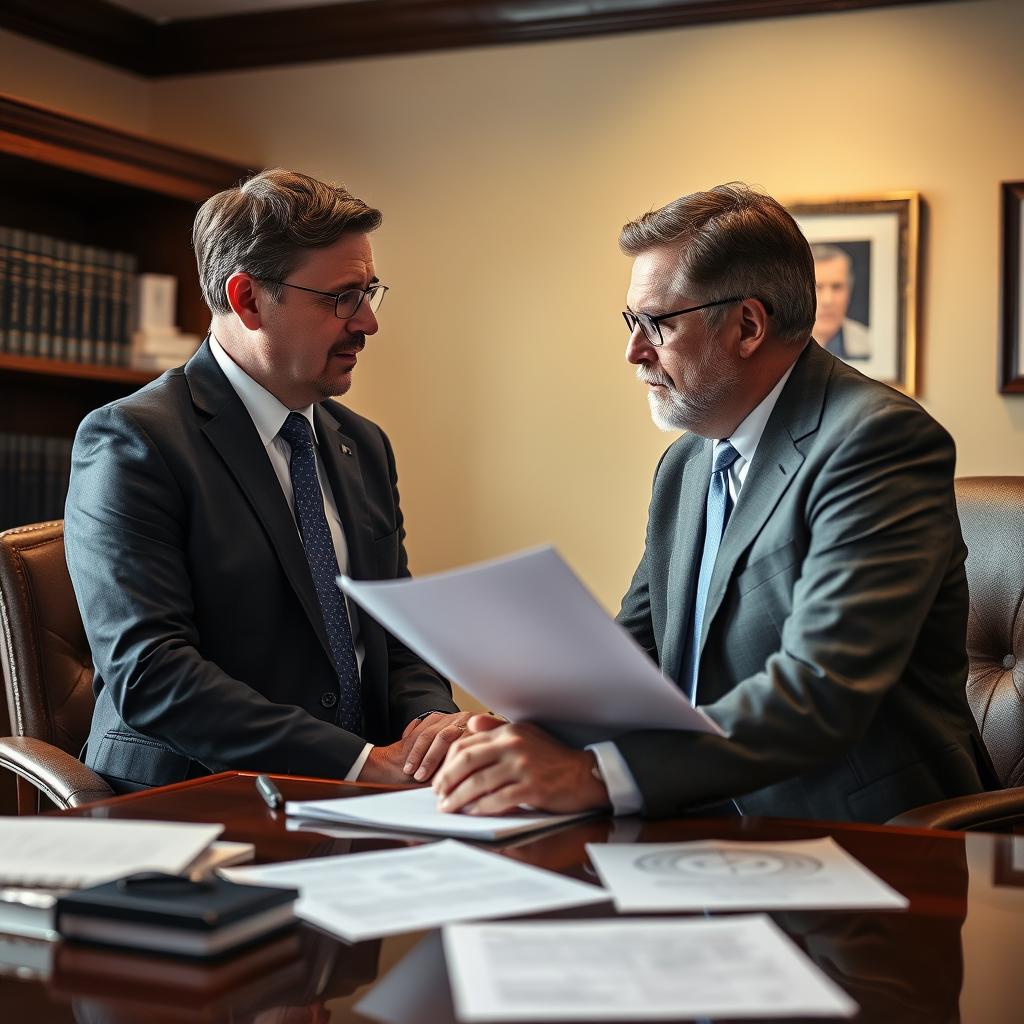
What are my Miranda rights in Virginia
When you are taken into custody and questioned by law enforcement in Virginia, the United States Constitution protects you from being compelled to incriminate yourself. You have the right to remain silent, the right to know that anything you say can be used against you in court, the right to have an attorney present during questioning, and the right to have an attorney appointed if you cannot afford one. These protections come from the United States Supreme Court’s decision in Miranda v. Arizona and apply in every Virginia jurisdiction—from Fairfax County General District Court to the Circuit Court of Powhatan County. If law enforcement fails to inform you of these rights, any statement you make may be excluded from evidence. Mr. Sris, the Owner and Founder of Law Offices Of SRIS, P.C., concentrates in criminal defense and can evaluate whether your Miranda rights were respected during an arrest or custodial interrogation. Reach Law Offices Of SRIS, P.C. at (888) 437-7747 to request a consultation.
Law Offices Of SRIS, P.C. — Advocacy Without Borders.
What Miranda rights mean in Virginia
In Virginia, as in all states, Miranda rights are triggered when a person is both in custody and subjected to interrogation by law enforcement. Custody means a reasonable person in your position would not feel free to leave, not simply that you have been formally arrested. Interrogation includes direct questioning as well as any words or actions the police should know are reasonably likely to elicit an incriminating response. The warnings must convey the following: you have the right to remain silent, that any statement you make can be used against you in court, that you have the right to speak with an attorney and to have an attorney present during questioning, and that if you cannot afford an attorney, one will be appointed for you. Virginia courts, including the General District Courts where many misdemeanors are first heard, follow these federal constitutional standards. Law enforcement officers in the Commonwealth are trained to administer these warnings before beginning custodial interrogation, and any waiver of those rights must be knowing, intelligent, and voluntary.
The Virginia practice of Miranda warnings mirrors the federal constitutional minimum. However, local practices can vary. For example, some Virginia police departments use written waiver forms, while others may rely on recorded oral advisements. The viability of a Miranda challenge often depends on the specific facts of the stop, the time at which questioning began, and whether a reasonable person would have felt free to leave. Mr. Sris and his Of Counsel team bring over 120 years of combined legal experience and 4,739+ documented firm-wide results to the analysis of custodial interrogations and can identify when law enforcement’s failure to give proper warnings creates grounds to suppress evidence. Results may vary. If you believe your Miranda rights were not honored, discussing the circumstances with an experienced criminal defense attorney is important.
How Mr. Sris and his Of Counsel handle criminal cases
Mr. Sris, a former prosecutor, founded Law Offices Of SRIS, P.C. in 1997. He concentrates on complex criminal defense and federal criminal matters, drawing on his prosecutorial background to anticipate how the Commonwealth’s Attorney will construct a case. When a client alleges a Miranda violation, Mr. Sris and his Of Counsel examine the sequence of events: when custody attached, whether the defendant was read the warnings, and whether any waiver was voluntary. They then assert suppression motions in the appropriate Virginia court—such as the General District Court or the Circuit Court—arguing that any statement obtained in violation of Miranda is inadmissible.
The process typically involves a thorough review of police reports, body-worn camera footage, audio recordings of the interrogation, and witness accounts. If the court grants the suppression motion, the prosecution may be forced to dismiss or reduce the charges because the remaining evidence is insufficient. Every case is different; the strength of a Miranda argument depends heavily on the exact facts. Mr. Sris and his Of Counsel approach each matter with a tailored strategy, working to achieve a favorable outcome. For a specific assessment of your situation, reach Law Offices Of SRIS, P.C. at (888) 437-7747.
About Mr. Sris and his Of Counsel team
Mr. Sris, the Owner and Founder of Law Offices Of SRIS, P.C., is admitted to practice in Virginia, Maryland, the District of Columbia, New Jersey, and New York. A former prosecutor with experience in criminal trial work, he testified before the Virginia House Courts of Justice Committee in support of 2019 HB 635 (chief patron Del. David Bulova), the bill that became the 2019 revision to Va. Code § 20-107.3(g). Mr. Sris is involved in a limited number of complex criminal and family law matters and works collaboratively with Of Counsel attorneys, working alongside his Of Counsel team—non-employee attorneys engaged through Excella who each have over a decade of practice experience. Collectively, Mr. Sris and his Of Counsel bring over 120 years of combined legal experience and 4,739+ documented firm-wide results. Results may vary.
Frequently Asked Questions
Do Miranda rights apply to all police questioning in Virginia?
Miranda warnings are required only when a person is in custody and being interrogated. If you are not in custody—for example, during a voluntary roadside conversation—the police do not need to give Miranda warnings. Custody means a reasonable person would not feel free to leave. Courts look at the totality of the circumstances, including whether handcuffs were used, the length of detention, and the tone of the questioning. For guidance on your specific situation, reach Law Offices Of SRIS, P.C. at (888) 437-7747.
What if I was not read my Miranda rights before I confessed in Virginia?
If you were in custody and interrogated without being advised of your Miranda rights, your statements may be suppressed. That means the prosecutor cannot use them against you at trial. However, the exclusion only applies to statements made during the custodial interrogation. Other evidence obtained independently—such as physical evidence found through a lawful search—generally remains admissible. To discuss the details of your matter, contact Law Offices Of SRIS, P.C. at (888) 437-7747.
Can I invoke my Miranda rights after I’ve already started talking to the police in Virginia?
Yes, you can invoke your right to remain silent or your right to an attorney at any time during questioning, and questioning must stop until you have an attorney present. A clear, unequivocal statement such as “I want a lawyer” or “I’m not saying anything else” triggers the requirement. If the police continue questioning after you invoke your rights, any subsequent statements may be suppressed. For a consultation, reach Mr. Sris and his Of Counsel at (888) 437-7747.
What should I do if I think my Miranda rights were violated in Virginia?
If you believe law enforcement did not honor your Miranda rights, you should contact a criminal defense attorney immediately and avoid discussing the case with anyone else. Preserving evidence—such as any recordings or notes—is important. An attorney can evaluate whether a suppression motion has merit and can litigate the issue before trial. For guidance on your specific situation, reach Law Offices Of SRIS, P.C. at (888) 437-7747.
Does an arrest automatically mean I was in custody for Miranda purposes?
Yes, a formal arrest generally establishes custody, but Miranda warnings are not triggered unless there is also interrogation. If the police arrest you and do not ask any questions, they may not need to read you your rights. However, once questioning begins after arrest, the warnings are required. For a consultation, reach Mr. Sris and his Of Counsel at (888) 437-7747.
Learn more about criminal defense services at Virginia criminal defense lawyer · Virginia DUI defense lawyer · Virginia felony defense lawyer.
Primary sources: Virginia Code Title 19.2 (Criminal Procedure) · Virginia Courts · United States Courts.
Attorney advertising. Prior results do not guarantee a similar outcome.
Case results depend on a variety of factors unique to each case.
Results may vary.