
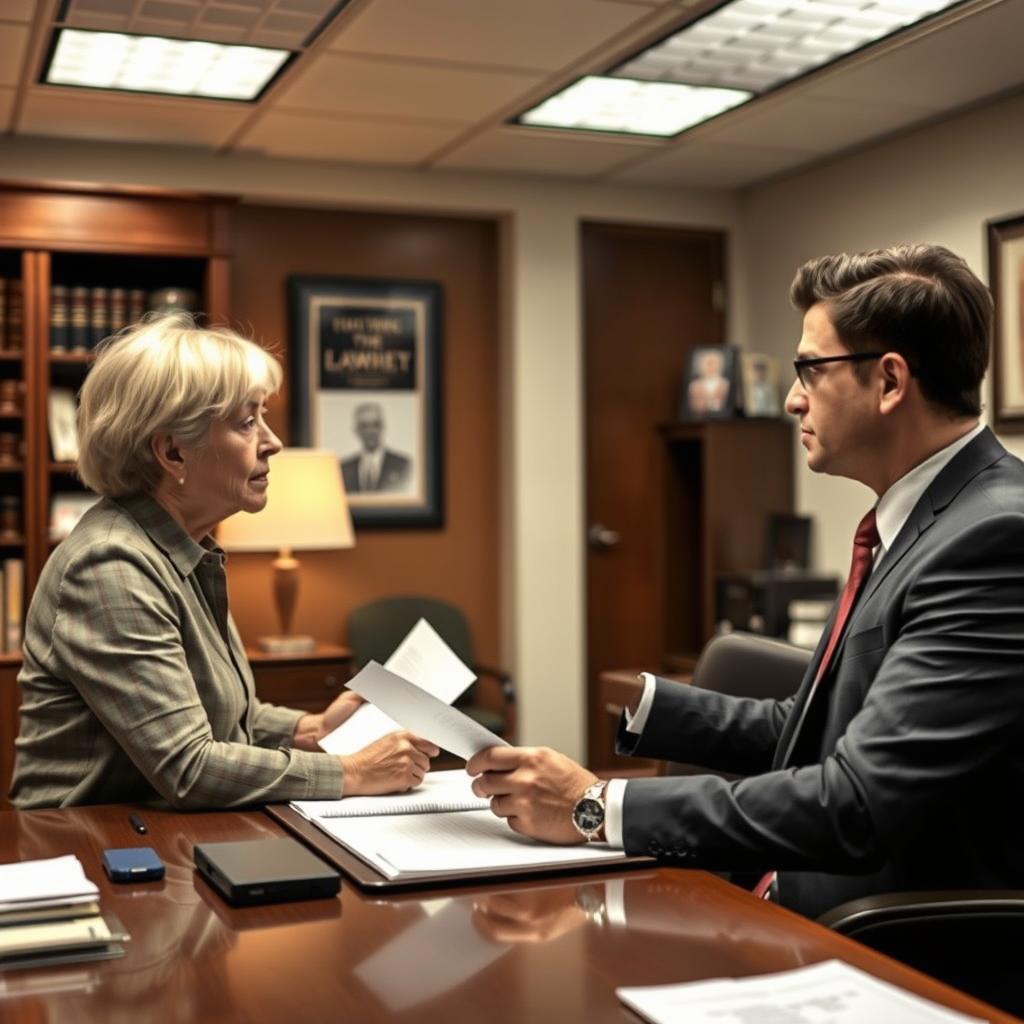
What happens at a criminal arraignment in U Street Corridor
If you face a criminal charge after an arrest in the U Street Corridor, your first court appearance—the arraignment—will take place at the D.C. Superior Court, Criminal Division, located at 500 Indiana Avenue NW, Washington, D.C. 20001. This initial hearing is a critical step in the D.C. Criminal process, and understanding what to expect can help you approach it with greater confidence.
Law Offices Of SRIS, P.C. – Advocacy Without Borders.
At the arraignment, the judicial officer formally reads the charges against you, and you are asked to enter a plea of guilty, not guilty, or nolo contendere. The court also addresses your release status. Washington, D.C. Does not rely on traditional cash bail for most offenses. Instead, the Pretrial Services Agency (PSA)—a federal agency—conducts a risk assessment and recommends release conditions to the court. A judicial officer decides whether you will be released on personal recognizance, on conditions, or held pending further proceedings.
Arrests in the U Street Corridor—a dense, culturally vibrant neighborhood near the Logan Circle and Shaw communities—are processed through the same D.C. Superior Court system as arrests anywhere else in the District. The U Street Corridor falls under the jurisdiction of the Metropolitan Police Department and the U.S. Attorney’s Office for the District of Columbia, which prosecutes criminal cases in D.C. Because the stakes at an arraignment can influence the entire case, having experienced criminal defense counsel present is essential. Mr. Sris and his Of Counsel team appear regularly at the D.C. Superior Court and handle arraignments for clients throughout the District. To discuss your upcoming arraignment or to arrange representation, reach Law Offices Of SRIS, P.C. at (888) 437-7747.
What a Criminal Arraignment Means for U Street Corridor Residents
The U Street Corridor is a neighborhood within the broader Washington, D.C. Community, and its residents are subject to the District’s unique criminal justice framework. Unlike states that have separate county court systems, the District relies on a unified court structure. The D.C. Superior Court’s Criminal Division handles all local criminal matters—from minor misdemeanors to serious felonies—and it is the venue where every arraignment for arrests occurring in the U Street Corridor, Logan Circle, Shaw, and surrounding areas is held.
Because D.C. Is a federal district, criminal prosecutions are brought by the United States Attorney’s Office for the District of Columbia, not by a state prosecutor. The court operates under the D.C. Code Title 22 (Criminal Offenses and Penalties) and the Superior Court Rules of Criminal Procedure. The arraignment serves as the procedural gateway: the defendant is informed of the charges, advised of the right to counsel, and invited to enter a plea. In D.C., the Pretrial Services Agency conducts an independent evaluation before the arraignment or shortly after arrest, and its risk-assessment report heavily influences the judicial officer’s decision on release or detention.
Residents of the U Street Corridor should understand that they have the right to an attorney at every stage, including at the arraignment. The court can appoint a lawyer through the Public Defender Service for the District of Columbia if the defendant qualifies financially. However, many people choose to retain private counsel, especially when the charges carry significant potential consequences or when they want an advocate to address release conditions and protect their interests from the outset. Mr. Sris and his Of Counsel have extensive experience handling criminal matters in D.C. Superior Court and are available to guide clients through the arraignment process.
How Mr. Sris and His Of Counsel Handle Criminal Arraignments in DC
When Law Offices Of SRIS, P.C. represent a client scheduled for arraignment at the D.C. Superior Court, the process begins before the hearing. The firm gathers the charging documents, reviews the arrest details, and evaluates the prosecution’s initial evidence to prepare for the hearing. An arraignment often determines release conditions that affect a client’s ability to return to work, be with family, and assist in building a defense. Mr. Sris and his Of Counsel therefore appear at the arraignment prepared to address the judicial officer on release-related issues, challenge the PSA’s risk assessment if necessary, and ensure the client understands each stage of the proceeding.
The team also files a notice of appearance and preserves critical procedural rights, such as the right to a probable-cause hearing in certain felony cases. Early involvement at the arraignment can shape the trajectory of the case: the plea entered may be not guilty, preserving all defenses, or the defense may negotiate with the prosecutor for amending charges or dismissing them outright before the formal reading. While no specific outcome can be promised, having a knowledgeable defense team at the arraignment helps ensure that the client’s interests are protected from the very first court appearance.
About Mr. Sris and His Of Counsel Team
Law Offices Of SRIS, P.C. was founded in 1997 by Mr. Sris, a former prosecutor who now serves as the firm’s Owner and Founder. Mr. Sris is admitted to practice in Virginia, Maryland, the District of Columbia, New Jersey, and New York. His experience includes handling complex criminal defense matters across multiple jurisdictions. Mr. Sris testified before the Virginia House Courts of Justice Committee in support of 2019 HB 635 (chief patron Del. David Bulova), the legislation that became the 2019 revision to Va. Code § 20‑107.3(g).
Together with his Of Counsel, Mr. Sris brings over 120 years of combined legal experience to the firm’s criminal practice. Results may vary. Mr. Sris and his Of Counsel have documented 4,739+ case results across all practice areas since 1997. The firm’s D.C. Criminal team regularly appears at the D.C. Superior Court for arraignments, trials, and other proceedings, and is well-acquainted with local practice before the Superior Court bench.
Frequently Asked Questions
What is the purpose of an arraignment in DC?
An arraignment is the first court appearance at which the defendant is formally informed of the charges against them and enters an initial plea. In D.C., the arraignment also provides the court an opportunity to address release conditions based on a Pretrial Services Agency risk assessment. The defendant is advised of the right to counsel, and the case is set on a track for future hearings or trial. This proceeding is required under D.C. Superior Court Rules and is fundamental to ensuring due process.
Do I need a lawyer at my arraignment?
While you are not legally required to have a lawyer at arraignment, it is strongly recommended that you retain experienced criminal defense counsel. An attorney can argue for favorable release conditions, challenge any errors in the charging documents, and advise on the plea that should be entered. Decisions made at this stage—including statements made in court—can have lasting consequences. Mr. Sris and his Of Counsel can appear with you at the D.C. Superior Court and advocate on your behalf from the outset.
What happens after the arraignment?
After arraignment, the court schedules the next hearing—commonly a status conference or a felony preliminary hearing—and the pretrial process begins. If released, you must comply with any conditions set by the court, such as reporting to PSA, staying away from certain locations, or observing a curfew. Discovery is exchanged, motions may be filed, and in felony cases, the grand jury process may begin. The timeline for these steps depends on the court’s calendar and the complexity of the case.
Can I be released without paying bail at my arraignment?
Yes, D.C. Does not typically use cash bail; instead, the Pretrial Services Agency recommends release conditions based on an objective risk assessment. The judicial officer may release you on personal recognizance—meaning you sign a promise to appear and abide by conditions—without requiring any money. In some cases, the court may impose supervisory release or electronic monitoring. The goal is to ensure appearance and community safety while minimizing pretrial detention.
What if I miss my arraignment?
Missing a scheduled arraignment can result in a bench warrant being issued for your arrest. If you fail to appear, the court may forfeit any bond posted and issue an order directing law enforcement to take you into custody. If you realize you will be absent due to an emergency, contact your attorney immediately so they can advise you and, where possible, request a continuance from the court.
How long does an arraignment take?
The arraignment hearing itself is typically brief, often lasting only a few minutes for a single defendant. The time from arrest to arraignment varies depending on whether the matter is a misdemeanor or a felony, the time of arrest, and the court’s processing schedule. Arraignments are generally held on the next court business day for individuals in custody, but the exact timing is subject to the court’s operations.
Can charges be dropped at the arraignment?
While it is uncommon for charges to be dismissed at the arraignment itself, the prosecutor may sometimes reduce or dismiss charges before or during the hearing. If the prosecution determines that there is insufficient evidence or that the case should not proceed, a dismissal or amendment may occur. An experienced defense attorney can communicate with the prosecutor before the arraignment to raise legal or factual issues that may lead to a favorable resolution early in the process.
How can I find a criminal lawyer for an arraignment in U Street Corridor?
You can contact Law Offices Of SRIS, P.C. at (888) 437-7747 to discuss your pending arraignment and to arrange representation. The firm’s Arlington location is conveniently situated for clients in the U Street Corridor and the broader District, and we regularly appear at the D.C. Superior Court for arraignments and all subsequent proceedings. To discuss your situation and learn how Mr. Sris and his Of Counsel can assist, call (888) 437-7747 or request a consultation through our website.
Related practice pages:
DC criminal defense overview
· DC Superior Court criminal practice
· Arrest and arraignment representation
Official resources:
D.C. Superior Court
· D.C. Code Title 22
· Pretrial Services Agency (PSA)
Attorney advertising. Prior results do not guarantee a similar outcome.
Case results depend on a variety of factors unique to each case.