
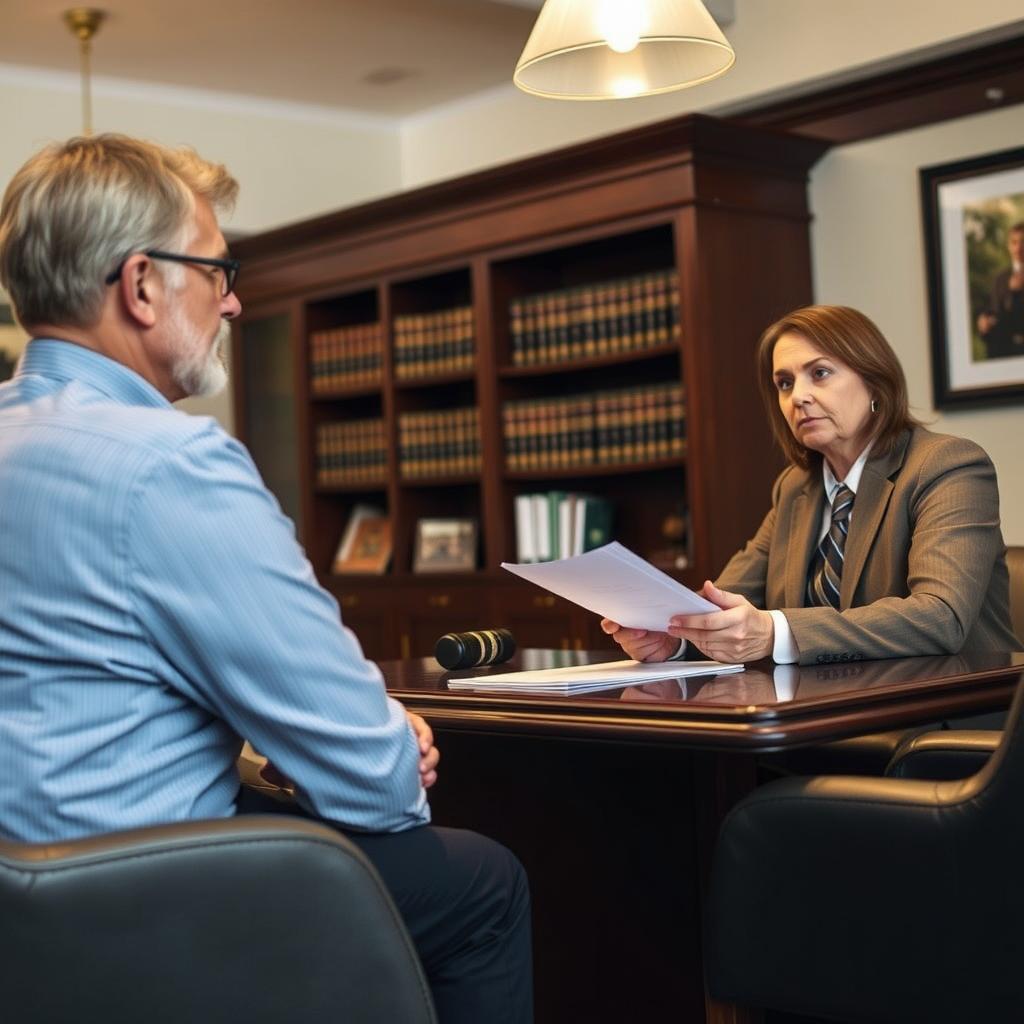
Do I need a lawyer for an uncontested divorce in Seneca County
You are not required by New York law to have a lawyer to file for an uncontested divorce in Seneca County, but legal guidance can help make sure your settlement agreement is complete and that your rights are protected. An uncontested divorce means you and your spouse agree on all issues, including property division, spousal support, and any child‑related arrangements, and one spouse files the paperwork with the Seneca County Supreme Court. While you may proceed on your own, a single drafting mistake, an overlooked asset, or an improperly structured parenting plan can create disputes that require later court intervention. Law Offices Of SRIS, P.C. provides legal assistance in family law matters throughout the Finger Lakes region and can help you navigate the process while avoiding common pitfalls. To discuss your situation, reach our firm at (888) 437-7747. Law Offices Of SRIS, P.C. – Advocacy Without Borders.
Understanding Uncontested Divorce in Seneca County, New York
In an uncontested divorce, both spouses sign a complete settlement agreement and one spouse files a “Summons with Notice” or a “Summons and Complaint” in the New York Supreme Court. Seneca County, part of the 7th Judicial District, uses the Seneca County Supreme Court at 48 West Williams Street, Waterloo, as the venue for all matrimonial matters, including divorce. If you and your spouse have resolved all issues yourselves, the process is largely administrative. The court still reviews the agreement to ensure it is fair and complies with New York’s Domestic Relations Law, but no trial is required.
The key to an uncontested divorce is a thorough, legally compliant separation agreement. That document must address the division of marital property under equitable distribution, spousal maintenance (if any), and child support and custody when children are involved. A judge does not rewrite an agreement because the parties later regret it; the agreement is binding. For that reason, many people in Seneca County choose to work with a family law attorney to review or draft the paperwork even when they are on good terms.
Frequently Asked Questions
Do I need a lawyer for an uncontested divorce in Seneca County?
You are not legally required to hire a lawyer for an uncontested divorce in New York, but working with one helps ensure your settlement agreement is properly drafted and addresses all required legal issues. Many uncontested divorces fail at the final stage because the paperwork is incomplete or the agreement omits important pension, tax, or property‑classification provisions. An attorney can also explain whether you are giving up a right to spousal maintenance, how child support guidelines apply to your income, and can file the documents on your behalf. If your spouse objects to any term later, a well‑drafted agreement is far harder to challenge. For help, contact Law Offices Of SRIS, P.C. at (888) 437-7747.
What does “uncontested divorce” mean in New York?
An uncontested divorce occurs when both spouses agree on all financial and child‑related matters and one spouse files for divorce while the other either does not contest it or consents in writing. The agreement typically resolves equitable distribution of marital property, spousal maintenance, child support, custody, and visitation. Unlike a contested case, nothing is decided by a judge after a trial. The court simply confirms that the agreement meets the legal standard under the Domestic Relations Law and issues the judgment of divorce. Because all terms are negotiated in advance, uncontested divorces are generally less stressful, faster, and less expensive than contested ones.
How do I start an uncontested divorce in Seneca County?
The case begins by filing a summons with notice or a summons and verified complaint with the Seneca County Clerk’s Office at the Supreme Court in Waterloo, together with the appropriate filing fee. One spouse (the plaintiff) starts the action and serves the other spouse (the defendant). If the defendant does not contest, you can submit the signed separation agreement, an affidavit of the plaintiff, and other required documents to the court. The judge then reviews the submission without a hearing and signs the judgment if everything is in order. The entire process can be handled by mail, though the court may require a brief in‑person appearance in some circumstances. An attorney can manage the filing and service steps.
What are the grounds for divorce in New York?
New York allows both fault‑based and no‑fault grounds. The most common ground for an uncontested divorce is the no‑fault provision: the marriage has been irretrievably broken for at least six months (DRL § 170(7)). That requires a sworn statement from one spouse. Fault grounds, such as adultery, cruel and inhuman treatment, abandonment, or imprisonment, are also available but rarely used in an uncontested case because both parties agree to the no‑fault ground. For uncontested filings, the no‑fault ground is the simplest path.
Do we have to go to court for an uncontested divorce?
In most uncontested divorces, neither spouse needs to appear in court in Seneca County; the judge reviews the documents on the papers submitted. If all required forms are complete and the agreement is satisfactory, the court signs the judgment without a hearing. Occasionally, a judge may request a brief appearance to clarify a term or confirm jurisdiction. If you are using a lawyer, they can appear on your behalf. This “on submission” process makes uncontested divorces particularly efficient for couples who have reached a complete agreement.
How long does an uncontested divorce take in Seneca County?
The timeline varies depending on the court’s calendar and whether the paperwork is accepted on the first submission. Compared to a contested divorce, which can take many months, an uncontested matter can move quickly once the required documents are filed. Delays most often occur when the settlement agreement is rejected for missing provisions or incorrect technical language. Having an experienced attorney review the package before filing typically speeds up the process by avoiding the need to correct and resubmit forms.
What is equitable distribution in a New York divorce?
New York follows equitable distribution, meaning marital property is divided fairly but not necessarily equally. Marital property includes assets acquired during the marriage, regardless of whose name is on the title, while separate property (such as pre‑marital assets, gifts, and inheritances) generally stays with the owning spouse. The judge considers a list of statutory factors, including the length of the marriage, each spouse’s income and earning capacity, contributions as a homemaker, and the needs of any children. In an uncontested divorce, you and your spouse decide the division yourselves in your agreement, but the court will review it to ensure the result is fair.
What if we have children under 21?
If you have minor children, your uncontested divorce agreement must include provisions for legal custody, physical custody, a parenting time schedule, and child support calculated using New York’s statutory guidelines. Child support is based on a percentage of the combined parental income, with adjustments for medical, educational, and childcare expenses. The court will also examine whether the parenting plan serves the children’s best interests. Even when both parents agree on these terms, the judge independently checks that the child support amount meets the mandatory guidelines. A family law attorney can help you draft a plan that satisfies these requirements.
What does it cost?
Court filing fees apply, and attorney fees vary depending on the complexity of your case and whether any additional services, such as service of process or document corrections, are needed. For current fee amounts, you can contact the Seneca County Clerk’s Office or your lawyer. Law Offices Of SRIS, P.C. can discuss the likely costs during an initial consultation. To request a consultation, call (888) 437-7747.
Can one spouse file if the other won’t participate?
Yes. If the defendant spouse does nothing after being served, the plaintiff can still obtain a divorce by default after the statutory waiting period. However, the divorce would then be uncontested only in the sense that the defendant did not appear, not because an agreement exists. Without a signed settlement, a judge would still decide property and support issues based on the plaintiff’s submissions. It is usually better to try to reach an agreement through negotiation or mediation. An attorney can explain your options if your spouse is uncooperative.
What if we can’t agree on some issues?
If you agree on the divorce itself but not on every financial or custody term, the matter is no longer fully uncontested. You may still resolve the contested issues through attorney‑assisted negotiation or mediation and then convert the case into an uncontested proceeding once everything is settled. If you cannot resolve the disputes, a judge will decide those issues at a hearing or trial. In that situation, having your own lawyer to protect your interests is essential. Law Offices Of SRIS, P.C. can represent you in contested as well as uncontested family law matters in Seneca County.
How can Law Offices Of SRIS, P.C. help with an uncontested divorce?
Our firm assists clients by reviewing or drafting settlement agreements, preparing and filing the required court documents, advising on child support and equitable distribution, and, when necessary, appearing in the Seneca County Supreme Court. Mr. Sris and his Of Counsel bring extensive combined legal experience to family law matters. We work to handle your case efficiently so you can move forward. To discuss your matter, reach our firm at (888) 437-7747.
About Mr. Sris and His Of Counsel Team
Law Offices Of SRIS, P.C., founded in 1997, serves clients across Virginia, Maryland, the District of Columbia, New Jersey, and New York. The firm is led by Mr. Sris, Owner and Founder, who is admitted in all five jurisdictions. Mr. Sris and his Of Counsel bring extensive combined legal experience to family law matters. Mr. Sris testified before the Virginia House Courts of Justice Committee in support of 2019 HB 635 (chief patron Del. David Bulova). Results may vary. Our New York location handles Seneca County divorce and family law issues by appointment. Call (888) 437-7747 to schedule a consultation.
Related pages:
- New York County (Manhattan) family law attorneys
- Kings County (Brooklyn) family law representation
- Queens County divorce and family law
- Nassau County family law practice
Attorney advertising. Prior results do not guarantee a similar outcome.
Case results depend on a variety of factors unique to each case.
Results may vary.