
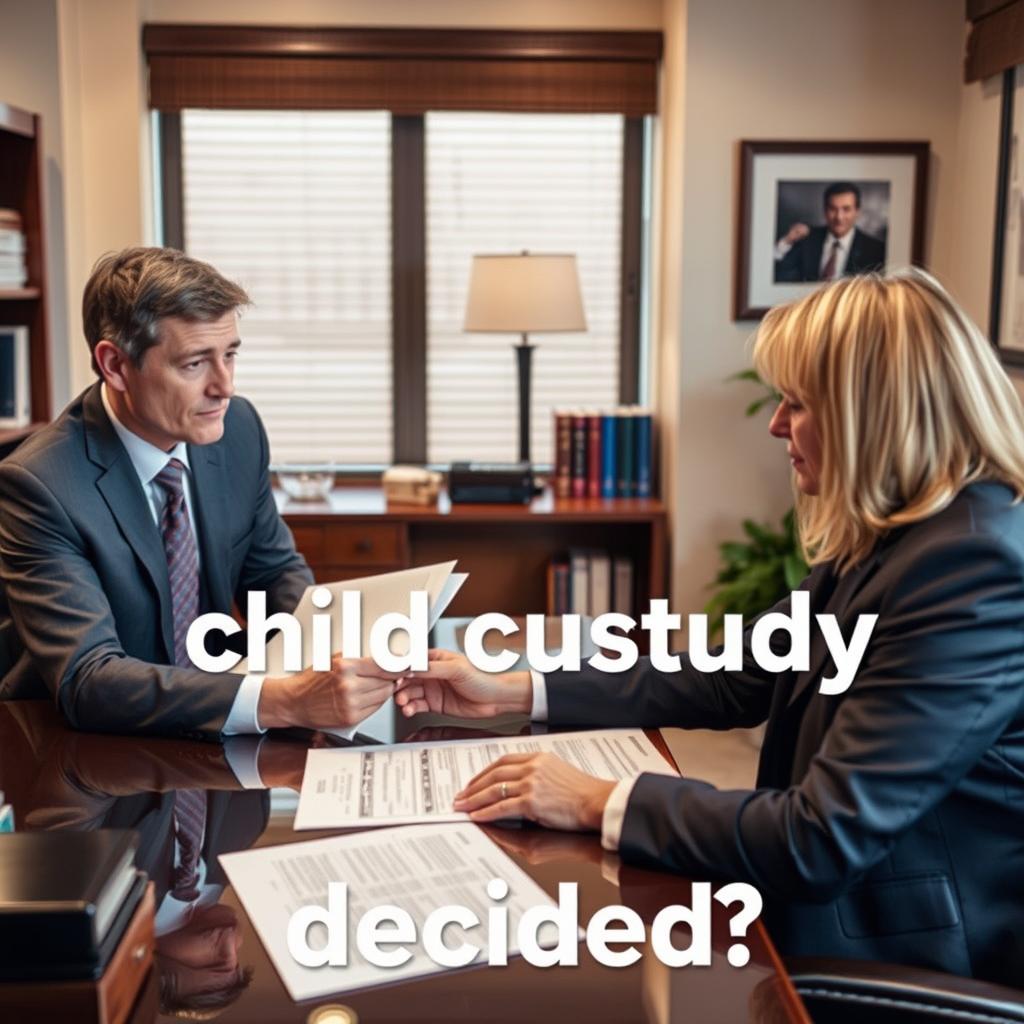
How is child custody decided in Chesapeake
When parents separate or divorce, nothing matters more than where the children will live and how decisions about their upbringing will be made. Virginia courts apply a specific legal framework to resolve custody disputes, and understanding that framework helps parents make informed choices. In Chesapeake, the Juvenile and Domestic Relations District Court handles standalone custody, visitation, and support matters, while the Circuit Court addresses custody within a divorce or equitable distribution case. The court’s primary concern is the child’s welfare, and a judge examines detailed evidence about each parent’s circumstances before issuing an order. Mr. Sris and his Of Counsel represent parents throughout Chesapeake—from Deep Creek to Great Bridge—and work to present a thorough picture of the family’s situation. For guidance on how Virginia’s custody laws apply to your circumstances, reach Law Offices Of SRIS, P.C. at (888) 437‑7747. Law Offices Of SRIS, P.C. – Advocacy Without Borders.
Direct Answer: How Virginia Courts Decide Child Custody in Chesapeake
Custody decisions in Chesapeake are controlled by Va. Code § 20‑124.3, which lists ten factors a judge must weigh to determine the best interests of the child. The court looks at the age and health of the child and each parent, the existing relationship between the child and each parent, the role each parent has played in the child’s life, and each parent’s willingness to support the child’s relationship with the other parent. The child’s own preference may be considered if the child is old enough and mature enough to express a reasoned opinion. The court also examines any history of family abuse, as well as each parent’s ability to meet the child’s emotional and developmental needs. No single factor controls the outcome; the judge balances all ten factors to reach an arrangement that serves the child’s overall well‑being.
In Chesapeake, a custody case typically begins when a parent files a petition in the Juvenile and Domestic Relations District Court. The court may order the parties to attend mediation before scheduling a contested hearing, though mediation is not mandatory. If the parents reach an agreement, the court will review it to ensure it is in the child’s best interests and, if so, enter an order reflecting that agreement. When no agreement is possible, the judge holds a hearing where both parents may present evidence, call witnesses, and testify. The court’s order will address legal custody—who makes major decisions about education, healthcare, and religion—and physical custody, meaning where the child lives. Arrangements can range from sole custody to various forms of shared parenting time.
Frequently Asked Questions
How is child custody decided in Chesapeake, Virginia?
Custody in Chesapeake is based on the best interests of the child under Va. Code § 20‑124.3, with the court weighing ten statutory factors. The Chesapeake Juvenile and Domestic Relations District Court handles standalone custody actions, while the Chesapeake Circuit Court determines custody within a divorce. The judge evaluates each parent’s involvement in the child’s life, the child’s needs, any history of abuse, and the child’s own preference if age‑appropriate. The goal is a parenting plan that maintains stability and supports the child’s emotional and physical development. Mr. Sris and his Of Counsel present evidence on each factor to help the court reach a sound decision.
What are the different types of custody in Virginia?
Virginia recognizes two forms of custody: legal custody, which is the authority to make major decisions for the child, and physical custody, which determines where the child lives. Legal custody can be joint or sole; joint legal custody means both parents share decision‑making responsibility. Physical custody may also be joint, with the child spending substantial time with each parent, or sole, with one parent serving as the primary residence. The court may also award visitation or parenting time to the non‑custodial parent. The specific arrangement chosen depends on application of the trusted‑interests factors.
Does the child get to choose which parent to live with in Chesapeake?
A child’s reasonable preference is one of the ten factors the court may consider, but the child does not get to make the final decision. The judge gives weight to the child’s wishes only if the child is of sufficient age, intelligence, and maturity to express a reasoned preference. The court will not base custody solely on a child’s statement; instead, it weighs the child’s preference alongside the other statutory factors. In practice, judges are cautious about placing a child in the middle of a custody dispute.
Can a custody order be modified later?
Yes, a Virginia court may modify custody if there has been a material change in circumstances since the last order and the modification would serve the child’s best interests. Common grounds include a parent’s relocation, a significant change in a parent’s work schedule, a parent’s remarriage, or concerns about the child’s safety. The parent seeking modification must file a motion in the court that issued the original order. Mr. Sris and his Of Counsel help clients evaluate whether changed circumstances meet the legal threshold for modification.
What role does mediation play in Chesapeake custody cases?
Mediation is available in Chesapeake family law cases and may be encouraged by the court, but it is not mandatory in Virginia custody disputes. In mediation, a neutral third party helps parents discuss custody and visitation and attempt to reach an agreement. If an agreement is reached, it can be submitted to the court for approval. Mediation can be less adversarial and more cost‑effective than litigation, but it works only when both parents are willing to negotiate in good faith. If mediation fails, the court will proceed to a hearing.
How does domestic violence affect a Chesapeake custody decision?
A history of family abuse is a specific factor the court must consider under Va. Code § 20‑124.3. If the court finds that a parent has committed abuse or neglect, that finding weighs heavily against awarding custody or unsupervised visitation to that parent. Virginia law does not presume that a parent with a history of domestic violence is unfit, but the court will fashion an order that protects the child and the victim parent. Protective orders may also impact custody and visitation arrangements.
What if one parent lives outside Virginia?
Chesapeake courts retain jurisdiction over a child custody case if Virginia was the child’s home state within six months before the case began, under the Uniform Child Custody Jurisdiction and Enforcement Act. When one parent lives out of state, the court may craft a parenting plan that accommodates travel and communication, such as extended summer parenting time and regular video calls. Relocation of a parent may also trigger a modification action if it substantially affects the existing arrangement.
Is child support connected to the custody arrangement?
Yes, child support in Virginia is calculated under the guidelines in Va. Code § 20‑108.2, and the amount depends in part on the custody arrangement. The guidelines consider both parents’ gross incomes, the cost of health insurance for the child, and the number of overnights the child spends with each parent. When physical custody is shared roughly equally, the support obligation may be adjusted to reflect both parents’ direct expenses. The same court that hears the custody matter can also enter a support order.
Do I need a lawyer for a custody case in Chesapeake?
You are not legally required to have a lawyer, but custody outcomes can have long‑lasting consequences, and an experienced attorney helps you present your case effectively. The rules of evidence and procedure apply, and a lawyer can examine witnesses, introduce documents, and argue the trusted‑interests factors on your behalf. Mr. Sris and his Of Counsel handle custody matters throughout Chesapeake and can explain how Virginia law applies to your unique family situation. For a consultation, reach Law Offices Of SRIS, P.C. at (888) 437‑7747.
About Mr. Sris and His Of Counsel Team
Mr. Sris, Owner and Founder of Law Offices Of SRIS, P.C., is a former prosecutor who has practiced law since 1997. He and his Of Counsel bring over 120 years of combined legal experience and have achieved 4,739+ documented firm-wide results in family law matters in Chesapeake and throughout Virginia. Results may vary. Mr. Sris is admitted in Virginia, Maryland, the District of Columbia, New Jersey, and New York. He testified before the Virginia House Courts of Justice Committee in support of 2019 HB 635 (chief patron Del. David Bulova), a measure that revised Virginia’s equitable distribution statute. The Of Counsel team includes attorneys with backgrounds in litigation, child welfare, and complex family disputes. Together, they represent parents at every stage of a custody case, from initial petitions through modification and enforcement. To discuss your custody matter, contact the firm at (888) 437‑7747.
Explore related topics: Family Law in Fairfax County · Family Law in Fairfax City · Family Law in Falls Church · Family Law in Prince William County · Family Law in Manassas
Attorney advertising. Prior results do not guarantee a similar outcome. Results may vary. Law Offices Of SRIS, P.C. serves clients from its Richmond Location at 7400 Beaufont Springs Drive, Suite 300, Room 395, Richmond, VA 23225. By appointment. Call (888) 437‑7747.
Case results depend on a variety of factors unique to each case.