
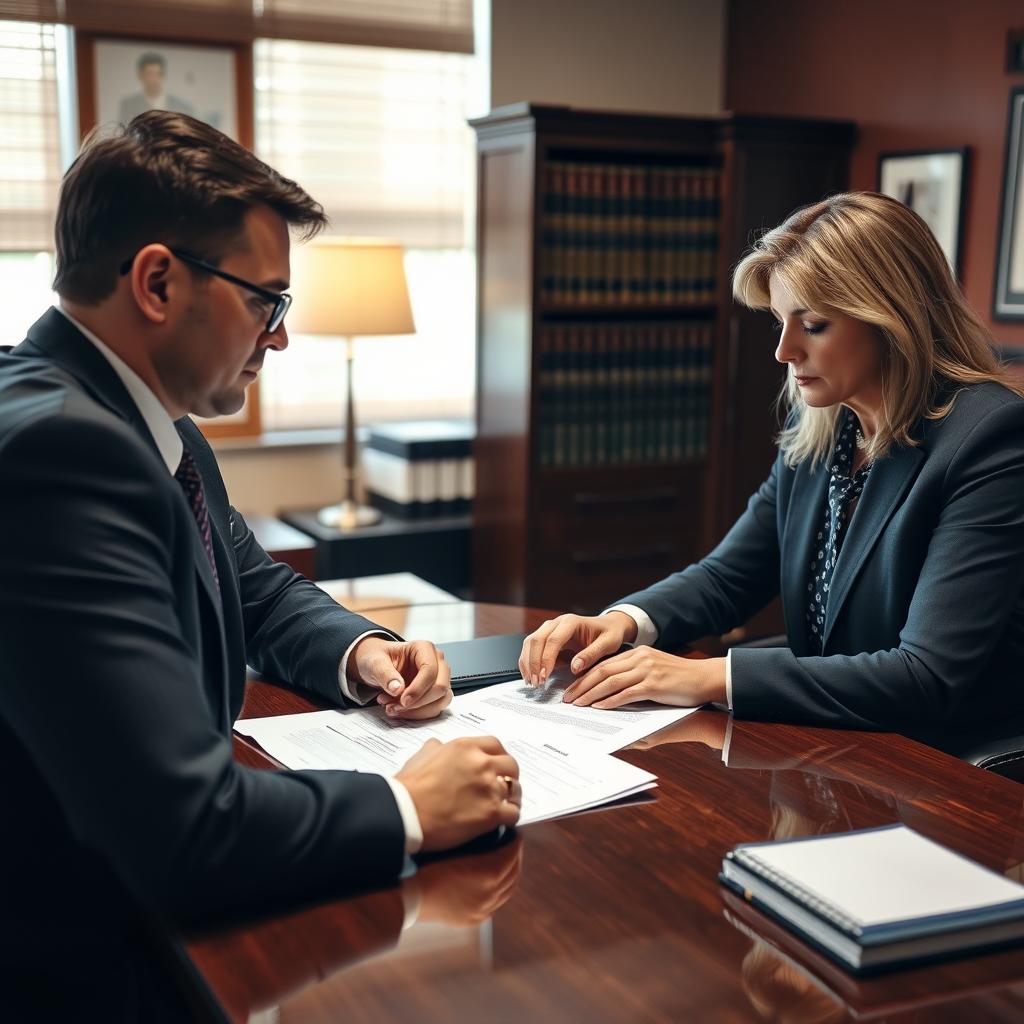
How much does a divorce lawyer cost in Erie County
Erie County residents seeking a divorce often ask this question first, and the answer depends on several factors—court costs, the complexity of the case, and the experience of the attorney. In New York, a divorce is filed in the Supreme Court of the county where either spouse resides, which for most Erie County matters means the Erie County Supreme Court, part of the 8th Judicial District. Unlike many legal matters, the cost of a divorce is not a fixed amount. It reflects the path the case takes. An uncontested divorce where both spouses agree on all terms—property division, spousal maintenance, child custody, and support—typically involves fewer court filings and less attorney time than a contested matter that proceeds to trial. Mr. Sris and his Of Counsel team at Law Offices Of SRIS, P.C. understand that cost is a central concern for anyone beginning this process, and consultations are available to discuss how these factors may apply in your situation. Reach our firm at (888) 437-7747. Law Offices Of SRIS, P.C. – Advocacy Without Borders.
What Family Law Means in Erie County
Family law in Erie County encompasses divorce, child custody, support, spousal maintenance, and related post-decree modifications. The Erie County Supreme Court has original jurisdiction over all divorce actions, while the Erie County Family Court handles standalone custody, visitation, and child support matters. The courthouse is located in downtown Buffalo, and cases are heard by justices assigned through the 8th Judicial District. New York is an equitable distribution state under Domestic Relations Law § 236, meaning marital property is divided fairly—not necessarily equally—based on a list of statutory factors. For Erie County residents, familiarity with local court procedures and the expectations of the judges who serve the Buffalo metropolitan area is an asset when navigating a family law case.
Erie County’s population centers—Buffalo, Amherst, Cheektowaga, and Tonawanda—generate a steady volume of family law filings. Many matters involve concerns specific to Western New York, including commingled retirement accounts from the region’s manufacturing, healthcare, and education sectors, as well as custody arrangements that must accommodate parents who cross the international border into Canada. Law Offices Of SRIS, P.C. represents clients in courts throughout the 8th Judicial District, and Mr. Sris and his Of Counsel are familiar with the procedural rhythms of the Erie County Supreme Court and the expectations of the Family Court. Whether a case settles through negotiation or proceeds to a hearing, our firm works to achieve a resolution that reflects the client’s priorities while managing costs responsibly.
How Mr. Sris and His Of Counsel Handle Family Law Cases
When a client contacts Law Offices Of SRIS, P.C. regarding a divorce in Erie County, the process begins with a consultation to understand the client’s objectives and the factual background. Mr. Sris and his Of Counsel then determine whether the matter can be resolved through negotiation and a separation agreement or whether litigation is necessary. In an uncontested divorce, the attorneys prepare all required documents—including the summons and complaint or notice, a verified statement of net worth, and a separation agreement—and ensure that the terms comply with New York’s statutory requirements. The goal is to secure a final judgment of divorce as straightforwardly as the circumstances allow.
If the divorce is contested, the approach shifts to litigation preparation. This includes discovery, motion practice for temporary relief such as pendente lite spousal maintenance or child support, and representation at court conferences and hearings. Throughout the process, Mr. Sris and his Of Counsel communicate with the client so that they understand the potential costs, the risks, and the available strategies. Every family law matter is unique, and the firm tailors its approach to the specific facts of the case while keeping the client informed about how decisions affect both the legal outcome and the overall cost. The firm does not promise a particular result, but draws on extensive combined legal experience to work toward a favorable resolution.
About Mr. Sris and His Of Counsel Team
Mr. Sris, Owner and Founder of Law Offices Of SRIS, P.C., established the firm in 1997 and has concentrated his practice on complex family law and criminal defense matters ever since. He is a former prosecutor who testified before the Virginia House Courts of Justice Committee in support of 2019 HB 635 (chief patron Del. David Bulova). Admitted in Virginia, Maryland, the District of Columbia, New Jersey, and New York, Mr. Sris maintains a limited personal caseload so that he can be directly involved in the strategic direction of the firm’s cases. His background in accounting and information systems further equips him to handle matters involving business valuations, retirement asset division, and other complex financial issues that frequently arise in Erie County divorces.
Mr. Sris works alongside a team of Of Counsel attorneys who bring additional depth to the firm’s family law practice. Each Of Counsel is an experienced litigator with over a decade of practice experience, and the collective familiarity with New York’s equitable distribution framework, child support guidelines, and maintenance formulas allows the firm to evaluate Erie County cases thoroughly. The team’s collaborative model means that a client benefits from multiple perspectives on the same file, from initial assessment through settlement or trial. The firm’s New York location serves clients throughout Western New York, with consultations available by appointment.
Frequently Asked Questions
How much does a divorce lawyer cost in Erie County?
The total cost of a divorce in Erie County depends on court filing fees, the complexity of the marital assets, whether the divorce is contested, and the fee structure your attorney uses. New York’s Supreme Court charges an index number fee and a Request for Judicial Intervention fee, among other court costs, but the bulk of a party’s expense is typically the legal fee. An uncontested divorce with a signed separation agreement can be handled at a lower cost than a matter that proceeds through discovery, motion practice, and trial. For a reliable estimate, reach our firm at (888) 437-7747 to schedule a consultation.
What factors affect the cost of a divorce in Erie County?
The primary factors are whether the case is contested, the complexity of the property division, the presence of child-related disputes, and the approach the lawyers take to the litigation. Court costs include an index number fee and a note of issue fee. Mediation or forensic accounting expenses may also arise, especially where a business or professional practice must be valued. The number of court appearances, the volume of discovery, and whether expert witnesses are required all influence the total. A straightforward, amicable proceeding ends sooner and costs less; a high-conflict matter with multiple motions will be more expensive.
Do I need a lawyer for a divorce in Erie County?
You are not legally required to have a lawyer, but proceeding without one can expose you to significant financial and custody risks. New York’s equitable distribution and maintenance laws are detailed, and an error in a separation agreement or a net worth statement can have long-term consequences. Even in an uncontested divorce, a lawyer can help ensure the final judgment is enforceable and that all required disclosures are complete. If your spouse has hired an attorney, representing yourself places you at a distinct disadvantage. A consultation is the trusted way to evaluate whether hiring counsel makes sense for your situation.
What are the grounds for divorce in New York?
New York recognizes a single no-fault ground—the irretrievable breakdown of the marriage for at least six months—as well as several fault grounds including adultery, cruel and inhuman treatment, abandonment for at least one year, and imprisonment for three or more years. Most Erie County divorces proceed on the no-fault ground under DRL § 170(7). If a fault ground is alleged, the court’s schedule and the proof required can increase the cost and duration of the matter. Mr. Sris and his Of Counsel can evaluate which ground best fits the facts of your case.
How long does a divorce take in Erie County?
The timeline varies significantly depending on whether the divorce is contested, the court’s calendar, and the cooperation between the parties. An uncontested matter where both spouses sign a separation agreement may be concluded in a matter of months after filing. A contested divorce involving discovery, settlement conferences, and possibly a trial can take considerably longer. The Erie County Supreme Court’s case management practices and the availability of judges in the 8th Judicial District also influence scheduling. Contact our firm to discuss a realistic timeline for your specific circumstances.
How can I find a lawyer in Erie County?
Begin by scheduling consultations with attorneys who handle Erie County family law matters so you can compare experience, approach, and cost expectations. Ask whether the lawyer is admitted in New York, how much of the practice is devoted to family law, and whether they have appeared in Erie County Supreme Court. A consultation also allows you to evaluate communication style and fee structure before committing. Law Offices Of SRIS, P.C. offers consultations by appointment—reach our firm at (888) 437-7747 to speak with Mr. Sris or his Of Counsel team.
Related areas we serve: New York County (Manhattan) | Kings County (Brooklyn) | Queens County (Queens) | Richmond County (Staten Island) | Nassau County (Long Island)
Authoritative resources: Erie County Supreme Court | New York Domestic Relations Law | 8th Judicial District
Attorney advertising. Prior results do not guarantee a similar outcome.
Case results depend on a variety of factors unique to each case. Results may vary.