
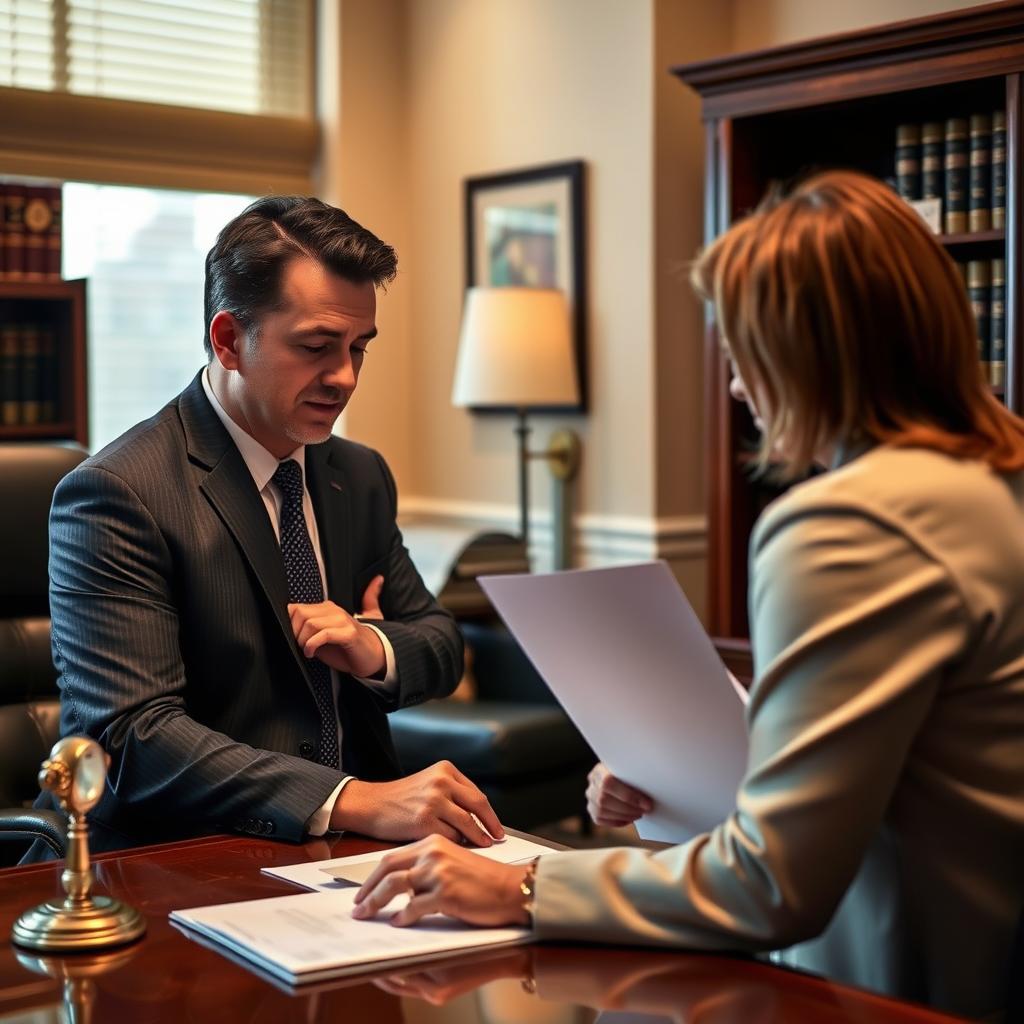
Restraining Order Lawyer Near Me
You heard the knock at the door and your stomach dropped. A law enforcement officer handed you paperwork — a restraining order petition filed by someone you know. Or perhaps you are the one who needs protection, and you do not know where to start. Either way, the next steps matter urgently. A restraining order can affect where you live, whether you see your children, and what shows up on background checks. Law Offices Of SRIS, P.C. represents individuals on both sides of protective order proceedings across Virginia, Maryland, the District of Columbia, New Jersey, and New York. Mr. Sris, a former prosecutor, founded the firm in 1997 and works alongside his Of Counsel team to handle family law matters involving protective orders, domestic relations, and related custody and support issues. Reach our location at (888) 437-7747 to request a consultation. Law Offices Of SRIS, P.C. — Advocacy Without Borders.
What a Restraining Order Means for Your Safety and Your Rights
A restraining order — called a protective order in Virginia and Maryland, a civil protection order in the District of Columbia, and an order of protection in New York and New Jersey — is a court directive that restricts contact between the person who files the petition and the person named in it. These orders can require the respondent to stay away from the petitioner’s home, workplace, and children’s school. They can mandate that the respondent surrender firearms and attend counseling. In many jurisdictions, an emergency or preliminary order can issue on the same day the petition is filed, based solely on the petitioner’s sworn statement, before the respondent even knows about it.
The stakes are high for everyone involved. For a petitioner, the order is a legal tool intended to prevent threatened harm. For a respondent, an order entered against them can carry collateral consequences that reach far beyond the no-contact restriction — affecting custody rights, employment background checks, firearm possession, and immigration status. Because a temporary order can issue ex parte, the respondent’s first opportunity to be heard is often the final hearing, which may be scheduled within days or weeks of the initial filing. Preparing for that hearing requires gathering evidence, identifying witnesses, and understanding what the statute requires the petitioner to prove. Law Offices Of SRIS, P.C. Concentrates its family law practice on helping clients prepare for these proceedings, whether they are seeking protection or responding to a petition filed against them.
How Mr. Sris and His Of Counsel Handle Restraining Order Cases
Every protective order case turns on specific facts, and the legal standard varies by jurisdiction. In Virginia, for example, a permanent protective order requires the petitioner to prove by a preponderance of the evidence that an act of family abuse occurred. Maryland courts apply a similar burden under the state’s domestic violence statute. District of Columbia civil protection orders proceed. New York family offense petitions are governed by Article 8 of the Family Court Act. Each jurisdiction has its own procedural timeline, evidentiary rules, and scope of relief available.
Mr. Sris and his Of Counsel begin by evaluating the petition, the supporting affidavit, and any police reports or other documentation. They identify the specific legal elements the other side must prove and look for evidentiary gaps, procedural defects, or credibility issues. Where the client is the petitioner, the team works to present a clear, well-documented account that satisfies the statutory standard. Where the client is the respondent, the focus is on challenging the sufficiency of the evidence, presenting contrary testimony, and negotiating for a resolution that protects the client’s rights — including custody and visitation rights that may be affected by the order. Because protective order cases often involve overlapping family law issues, the firm addresses custody, support, and divorce-related matters in parallel where appropriate.
About Mr. Sris and His Of Counsel Team
Mr. Sris, Owner and Founder of Law Offices Of SRIS, P.C., is a former prosecutor who has practiced law since 1997. Admitted in Virginia, Maryland, the District of Columbia, New Jersey, and New York, he leads the firm’s family law practice and personally handles complex protective order matters. Mr. Sris testified before the Virginia House Courts of Justice Committee in support of 2019 HB 635 (chief patron Del. David Bulova). His Of Counsel team includes attorneys with prosecutorial backgrounds and extensive courtroom experience in family law litigation. Mr. Sris and his Of Counsel bring over 120 years of combined legal experience, supported by 4,739+ documented firm-wide results. Results may vary.
The firm has documented case results across all five jurisdictions and maintains locations in Fairfax, Virginia; Rockville, Maryland; Arlington, Virginia (serving Washington, D.C. Clients); Tinton Falls, New Jersey; and Buffalo, New York. Consultations are available by appointment. Phones are answered 24 hours a day. Reach our location at (888) 437-7747.
Frequently Asked Questions
What is the difference between a restraining order and a protective order?
A restraining order and a protective order are different terms used by different states for the same basic court directive that limits contact between two people. Virginia and Maryland use the term “protective order.” The District of Columbia calls it a “civil protection order.” New York and New Jersey refer to “orders of protection.” Regardless of the name, these orders can include stay-away provisions, no-contact directives, temporary custody arrangements, and firearm surrender requirements. The specific relief available depends on the jurisdiction and the stage of the proceeding — emergency, preliminary, or permanent. For guidance on the terminology and procedures in your jurisdiction, contact Law Offices Of SRIS, P.C. at (888) 437-7747.
Can a restraining order be issued without me being present?
Yes, an emergency or preliminary protective order can be issued ex parte — meaning the court hears only the petitioner’s side before issuing the order. In Virginia, a preliminary protective order can be granted based on the petitioner’s sworn petition alone when the court finds that family abuse has occurred and there is probable danger of further abuse. Similar ex parte procedures exist in Maryland, the District of Columbia, New York, and New Jersey. The respondent is typically served with the order after it issues and has the right to a full hearing, usually scheduled within a short timeframe set by the court. Preparing for that hearing is critical because it is often the respondent’s first opportunity to present evidence and challenge the allegations.
What happens at a final protective order hearing?
At a final protective order hearing, both sides present evidence and testimony, and the court decides whether the petitioner has met the legal standard for a longer-term order. The petitioner bears the burden of proof. Both parties may present witnesses, introduce documents — including police reports, text messages, photographs, and medical records — and cross-examine the other side’s witnesses. The hearing is conducted before a judge, not a jury. If the court finds the standard is met, it may issue an order lasting up to two years in some jurisdictions, or longer in others. The order can address custody, visitation, child support, and use of the family residence. Mr. Sris and his Of Counsel represent clients at these hearings across Virginia, Maryland, DC, New Jersey, and New York. For a consultation, reach Mr. Sris and his Of Counsel at (888) 437-7747.
Can I get a restraining order if I am not married to the other person?
Yes, protective orders are available to people who have a qualifying relationship with the respondent, which often extends beyond marriage. In Virginia, for example, a protective order can be sought against a family or household member, which includes spouses, former spouses, parents, children, stepchildren, siblings, in-laws who live in the same household, and persons who have cohabited or have a child in common. New York’s family offense jurisdiction covers current and former spouses, persons related by blood or marriage, persons who have a child together, and persons in an intimate relationship, regardless of whether they have lived together. The specific list of qualifying relationships varies by state. Contact Law Offices Of SRIS, P.C. at (888) 437-7747 to discuss whether your situation qualifies.
Does a restraining order go on my record?
Protective orders are court records, and while a civil protective order is not a criminal conviction, it can appear in background checks and have significant collateral consequences. In many jurisdictions, a final protective order is entered into a state registry accessible to law enforcement. It can affect employment background checks, firearm rights under federal law, professional licensing, and immigration status. A violation of a protective order can result in criminal charges with separate penalties. Because of the long-term consequences, anyone named as a respondent in a protective order petition should seek legal guidance before the final hearing. To discuss the details of your matter, contact Law Offices Of SRIS, P.C. at (888) 437-7747.
How long does a protective order last?
The duration of a protective order depends on the jurisdiction and the type of order issued. Emergency orders typically last only a few days until a preliminary hearing. Preliminary orders may last for a period of weeks until a final hearing. Final or permanent protective orders can last for up to two years in Virginia, up to one year in Maryland, and for varying periods in DC, New York, and New Jersey, with the possibility of extension or renewal in many jurisdictions. The timeline depends on the court’s calendar and the specific facts of the case. For jurisdiction-specific guidance, reach Law Offices Of SRIS, P.C. at (888) 437-7747.
For additional information on family law protective orders across our practice jurisdictions, visit our main site: srislawyer.com/family-law.
Attorney advertising. Prior results do not guarantee a similar outcome. Case results depend on a variety of factors unique to each case. Attorney responsible for this advertising: Mr. Sris. Results may vary.