
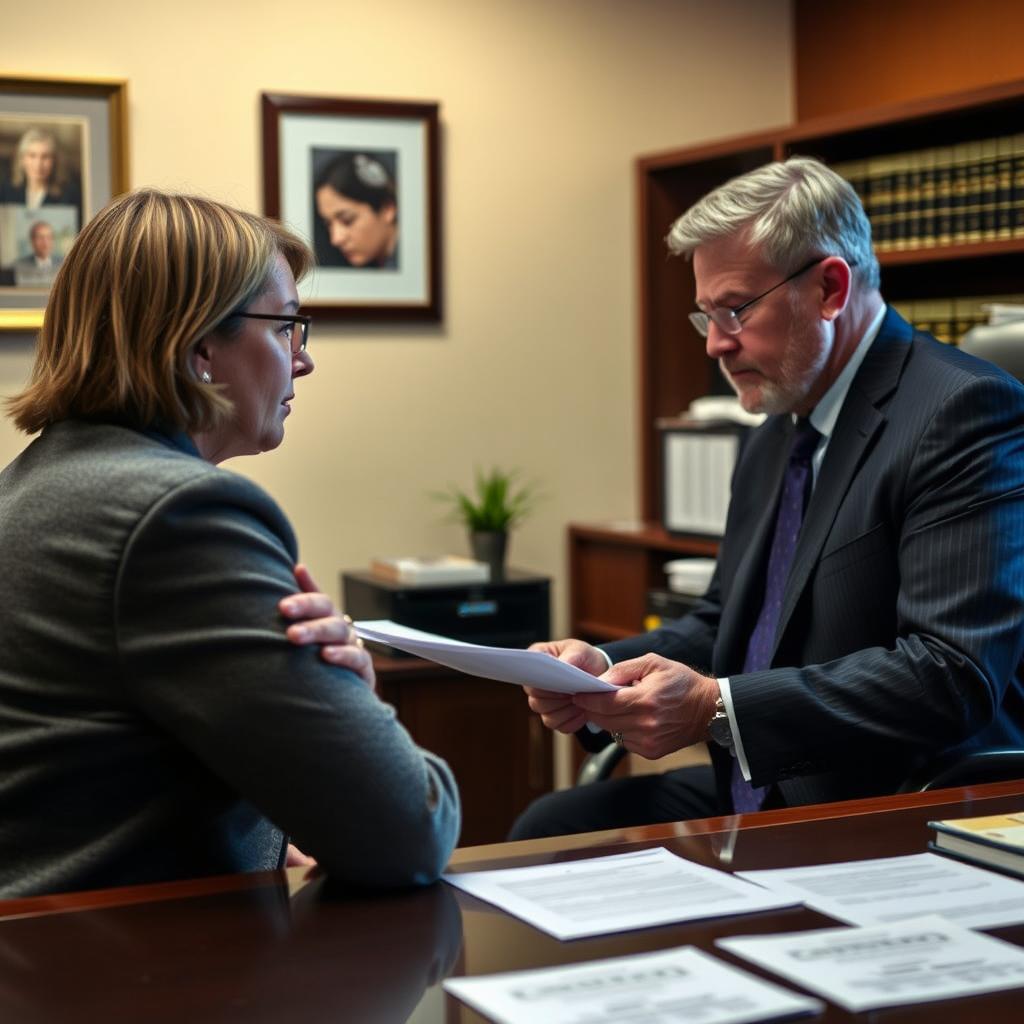
What happens at a criminal arraignment in Burlington County
An arraignment in Burlington County is the first formal court appearance after an arrest or a criminal complaint has been filed. At this hearing, the judge will read the charges against you, inform you of your rights, and ask for your initial plea—guilty, not guilty, or, in limited circumstances, no contest. The judge also addresses the issue of pretrial release. Because New Jersey abolished cash bail in January 2017 and instead uses a computerized Public Safety Assessment (PSA) to gauge flight risk and danger to the community, the court’s decision is based on data, not on your ability to pay money. The arraignment usually takes place at the Superior Court of NJ, Burlington Vicinage (49 Rancocas Road, Mount Holly, NJ 08060) for indictable offenses, or at the municipal court for disorderly persons-level matters. Whether your charge is a serious felony or a lesser offense, the arraignment sets the procedural timeline for your case. To speak with an experienced defense attorney about your upcoming appearance, reach Law Offices Of SRIS, P.C. at (888) 437-7747.
Direct answer: what you can expect at a Burlington County arraignment
A criminal arraignment in Burlington County is not a trial. It is an administrative step that moves the case forward. The judge begins by confirming your identity and making sure you understand the charges. You will hear the statute you are alleged to have violated, the elements of the offense, and the potential penalties. The judge will then ask how you plead. If you plead not guilty, the matter is scheduled for further proceedings such as a pretrial conference or, in the case of an indictable offense, a status conference. If you plead guilty, the judge must question you to ensure the plea is voluntary and informed before accepting it. In most situations, an attorney will advise you to plead not guilty so there is time to review the evidence and explore diversion programs like Pre-Trial Intervention (PTI) or conditional discharge.
Pretrial release is a critical part of the arraignment. Using the Public Safety Assessment, which scores factors such as pending charges, prior convictions, and past failures to appear, the judge decides whether to release you on your own recognizance, impose monitored conditions, or detain you. Because money can no longer be required as bail, the focus is squarely on risk. The judge will also explain your right to an attorney. If you cannot afford private counsel, you can apply for a public defender, subject to an application fee that may be waived. Given the immediate consequences an arraignment can create, having a lawyer present is strongly advised. Your attorney can argue for the least restrictive release conditions and begin shaping the defense.
Frequently Asked Questions
What exactly happens at a criminal arraignment in Burlington County?
At an arraignment, the judge reads the official charges, advises you of your rights, takes your plea, and sets pretrial release conditions under New Jersey’s bail-reform framework. In Burlington County, the proceeding occurs in the Superior Court for indictable crimes or in municipal court for disorderly persons offenses. The judge verifies your name and address, confirms you have a copy of the complaint, and explains the potential penalties. If you plead not guilty, the case continues to a pretrial conference. If you plead guilty, the judge may sentence you immediately or order a presentence investigation. Throughout the hearing, the judge will also address any concerns about release or detention based on the Public Safety Assessment.
Do I need a lawyer at my arraignment in Burlington County?
You are not required to have a lawyer present at arraignment, but having one is strongly recommended because decisions made at this stage can affect your case for months. An attorney can argue for release on your own recognizance, challenge an elevated PSA score, or request a reduction in conditions. A lawyer can also advise you on how to plead. Even a seemingly straightforward guilty plea carries consequences including a criminal record, fines, and possible immigration effects. If you cannot afford counsel, you can apply for a public defender. To discuss your situation before your court date, reach Law Offices Of SRIS, P.C. at (888) 437-7747.
What is a disorderly persons offense arraignment like in Burlington County?
A disorderly persons offense arraignment—New Jersey’s equivalent of a misdemeanor—typically occurs in the local municipal court and follows an abbreviated timeline. At the hearing, the judge will read the summons or complaint, explain the maximum penalty (up to six months in jail and a fine), and accept your plea. Because these matters often move quickly, you may be asked to proceed to trial within 30 to 60 days. Pretrial release decisions still rely on the PSA, but detention is less common for lower-level charges. An attorney can identify whether you qualify for a diversion program such as conditional discharge for first-time drug possession.
What is an indictable offense arraignment like in Burlington County Superior Court?
An indictable offense (felony-level) arraignment takes place in the Superior Court of NJ, Burlington Vicinage, and the procedure is more formal because the stakes are higher. The charges are brought by a grand jury indictment, and the judge advises you of the felony classification and sentencing range, which can extend from 18 months for a fourth-degree crime to 20 years for a first-degree offense. You will be given a date for a pretrial conference and, if applicable, a deadline to file motions. The PSA plays a central role: because the charges are more serious, the risk score may lean toward detention, making it critical for your attorney to present mitigating information immediately.
Will I be released from custody after my arraignment?
Release after arraignment depends on your Public Safety Assessment score, not on your ability to post cash bail. Under the Criminal Justice Reform Act, a judge can release you on your own recognizance, impose conditions such as reporting to a pretrial services officer or electronic monitoring, or order detention without bail. The PSA considers your criminal history, previous failures to appear, and the severity of the current charge. If you are detained, you have the right to a detention hearing within a short period. Mr. Sris and his Of Counsel team regularly advocate for release on the least restrictive terms possible. For a consultation, reach our New Jersey location at (888) 437-7747.
What is a Public Safety Assessment (PSA) in New Jersey?
The Public Safety Assessment is a data-driven risk-evaluation tool used in every Burlington County arraignment to help judges decide whether a defendant should be released or detained while the case is pending. The PSA generates a score based on objective factors: age at current arrest, pending charges at the time of the offense, prior convictions, and prior failures to appear in court. There are no bail bondsmen in New Jersey because the state ended cash bail completely. If the PSA indicates a low risk, release is likely. If it indicates a high risk, the prosecutor may move for detention. An experienced attorney can challenge the PSA’s recommendations by presenting facts the algorithm did not capture.
Can I plead guilty at the arraignment?
It is possible to plead guilty at arraignment, but doing so without legal advice can be risky because you waive your right to challenge the evidence and may face immediate sentencing. For minor disorderly persons offenses, the court may accept a guilty plea and impose a sentence the same day. For indictable offenses, a plea at arraignment is rare because the prosecutor has not yet turned over discovery and the judge must ensure the plea is knowing and voluntary. In almost every case, an attorney will recommend a not-guilty plea so the defense can investigate and negotiate. Results may vary.
What happens if I miss my arraignment in Burlington County?
Missing your arraignment can result in the judge issuing a bench warrant for your arrest and forfeiture of any posted bail substitute. Since New Jersey does not use cash bail, the consequences focus on a failure-to-appear warrant that will be entered into the statewide system. If you have a legitimate reason for missing the date, contact an attorney immediately to address the warrant and reschedule. You may also face an additional charge for contempt of court. To discuss the details of your matter, contact Law Offices Of SRIS, P.C. at (888) 437-7747.
Can I get a public defender at my arraignment in Burlington County?
If you cannot afford to hire a private attorney, you can apply for a public defender at the arraignment by completing a financial-eligibility form. The judge will review your income and assets to determine whether you qualify. Even if you qualify, a court may impose a $200 application fee, which can be waived. The public defender may be assigned on the spot or shortly afterward. However, because public defenders handle large caseloads, many people choose to retain private counsel who can dedicate focused time to the matter right from the start.
How do I prepare for my arraignment in Burlington County?
Prepare by collecting all relevant documents—including the complaint, any bail or release paperwork, and identification—and by arranging to have an attorney present. Dress in business-casual attire and arrive early so you can find the correct courtroom at 49 Rancocas Road, Mount Holly, NJ 08060. Do not discuss the facts of your case with anyone other than your lawyer. Write down any questions you have about the charges or the next steps, and bring them to the meeting. If you have not hired counsel yet, call our firm at (888) 437-7747 before the hearing to learn how we can stand with you at this critical stage.
About Mr. Sris and His Of Counsel Team
Law Offices Of SRIS, P.C. has been serving clients since 1997. Mr. Sris, Owner and Founder, is a former prosecutor who understands how the state builds its case. He and his Of Counsel team bring extensive combined legal experience to criminal defense matters in Burlington County and across New Jersey. The firm’s attorneys are admitted in Virginia, Maryland, the District of Columbia, New Jersey, and New York, giving them a broad perspective on multi-jurisdictional strategies. When you face a criminal charge, having a team that knows local court procedure—from the PSA process to the Pre-Trial Intervention program—can make a meaningful difference. Results may vary. For a consultation, reach our New Jersey location at (888) 437-7747.
Attorney advertising. Prior results do not guarantee a similar outcome.
Attorney responsible for this advertising: Mr. Sris.
Results may vary.
Case results depend on a variety of factors unique to each case.