
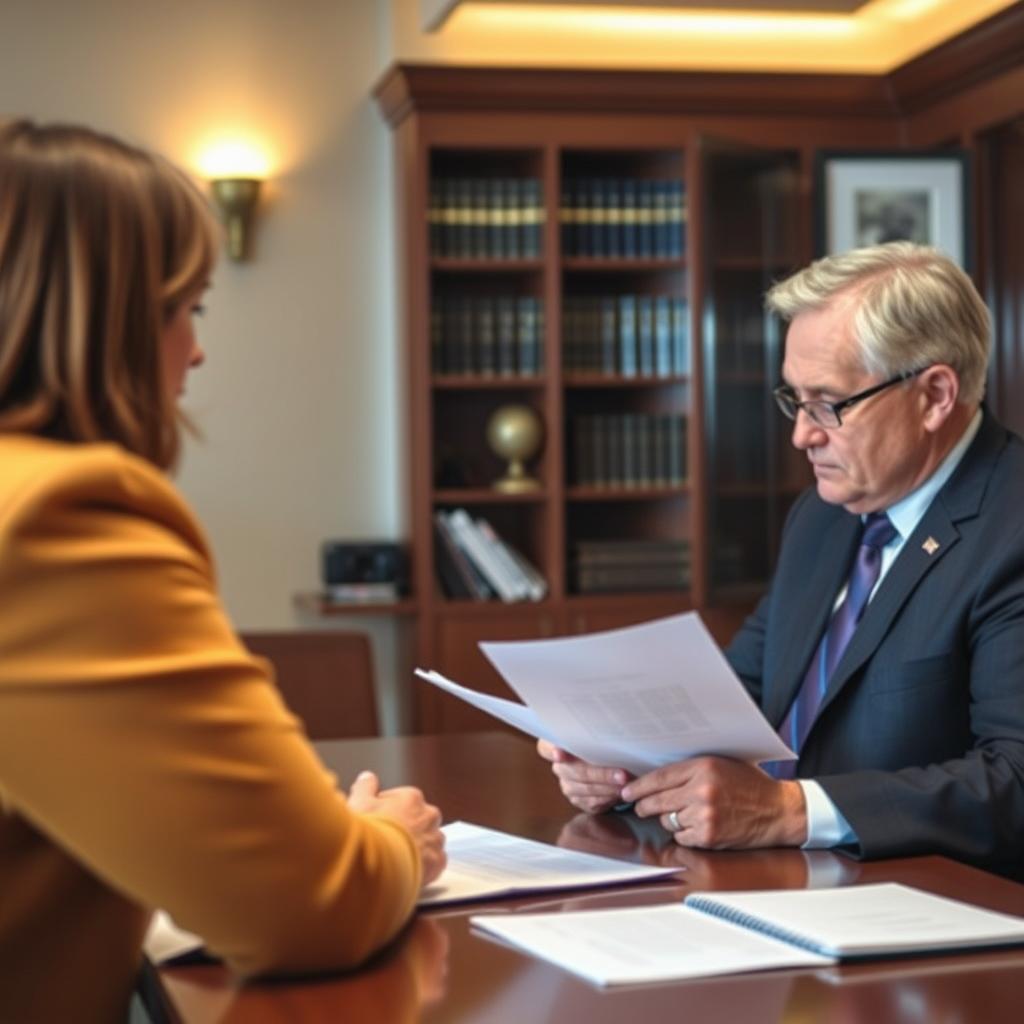
What happens at a criminal arraignment in Washington DC
An arraignment at the D.C. Superior Court is the first formal court appearance after an arrest. The person accused—the defendant—appears before a judge in the Criminal Division, typically within 24 hours of being taken into custody. The purpose is straightforward: the court makes sure the defendant understands the charges, enters a plea, and determines the conditions of release while the case moves forward. Because the District of Columbia operates under a unique federal/local hybrid system, criminal cases are prosecuted by the United States Attorney’s Office for the District of Columbia, not a local district attorney. The defendant’s first interaction with the justice system in the nation’s capital can feel overwhelming, especially when what happens next is unclear. At Law Offices Of SRIS, P.C., Mr. Sris and his Of Counsel team represent individuals at arraignments in Washington, D.C., providing clear guidance through the process. Call (888) 437-7747 to request a consultation. Law Offices Of SRIS, P.C. – Advocacy Without Borders.
Understanding what occurs at a D.C. Superior Court arraignment
The arraignment hearing in Washington, D.C., brings several court actors to the courtroom at once: the judge, a prosecutor from the United States Attorney’s Office, a defense attorney (whether retained or from the Public Defender Service), a representative from the Pretrial Services Agency, and the defendant. The judge begins by reading the charges aloud or confirming that the defendant has received a copy of the indictment or information. The charging document typically lists violations of the D.C. Code, though federal charges may also be involved in certain circumstances. The defendant is then asked to enter a plea: guilty, not guilty, or, in limited situations, nolo contendere. Most defendants plead not guilty at this stage to preserve their rights while their counsel reviews the evidence and explores potential defenses.
The next critical step involves release conditions. Washington, D.C., does not use a traditional cash-bail system. Instead, the Pretrial Services Agency—a federal agency—conducts a risk assessment and makes a recommendation to the court. The judge then decides whether the defendant will be released on personal recognizance, placed under supervised release with conditions such as check-ins or travel restrictions, or held without bond. This determination is based on factors including the nature of the alleged offense, the defendant’s ties to the community, and any prior criminal record. Because no money needs to be posted, many individuals are released without payment, but conditions can still be strict. After the release decision, the judge sets the next court date, usually for a status hearing or preliminary hearing, depending on whether the charge is a misdemeanor or felony.
How an experienced defense lawyer approaches an arraignment
While an arraignment may appear to be a ministerial step, it can shape the entire trajectory of a criminal case. Mr. Sris and his Of Counsel prepare thoroughly by reviewing the charging document, evaluating the strength of the government’s case at its inception, and identifying any procedural irregularities in the arrest. Early intervention can be decisive: a lawyer can argue for more favorable release conditions, address potential violations of the defendant’s rights that may affect later proceedings, and ensure the defendant does not make statements that could harm the defense. In D.C., where the U.S. Attorney’s Office prosecutes local crimes, familiarity with the specific practices of the Criminal Division is essential. Mr. Sris and his Of Counsel have extensive experience appearing in D.C. Superior Court and work to protect the defendant’s interests from the first appearance onward.
Frequently Asked Questions
What is an arraignment in Washington, D.C.?
An arraignment in Washington, D.C., is a hearing at D.C. Superior Court where the defendant is formally told of the charges, enters a plea, and the judge determines release conditions under the guidance of the Pretrial Services Agency. The prosecutor from the United States Attorney’s Office for the District of Columbia presents the charges, and the defense attorney advises the defendant on how to plead. If the defendant pleads not guilty, the case proceeds toward future hearings. The judge may also address any preliminary legal issues, such as scheduling a detention hearing if the government seeks to hold the defendant without bond.
Do I need a lawyer for a criminal arraignment in D.C.?
While you have the right to represent yourself, having a criminal defense lawyer at your D.C. Arraignment is strongly advisable because the decisions made at this hearing—including release conditions and plea entry—can affect the rest of your case. An experienced attorney can challenge the government’s request for detention, present mitigating information to the court, and ensure you do not inadvertently waive important rights. In the District, the Public Defender Service provides representation for those who qualify, but many individuals choose to retain private counsel to have a dedicated advocate from the outset.
How quickly after an arrest is the arraignment held in Washington, D.C.?
In Washington, D.C., the arraignment typically occurs within 24 hours of arrest, often the next business day or even the same day for arrests occurring early in the morning. The swift timeline is intended to comply with constitutional requirements and ensures that a defendant does not remain in custody for an extended period without judicial oversight. The exact timing can vary depending on the time of arrest, the court’s calendar, and whether the charge is a misdemeanor or a felony. Defendants are usually transported directly to the cellblock at D.C. Superior Court and brought before a judge without unnecessary delay.
What happens at a DC Superior Court arraignment?
At a D.C. Superior Court arraignment, the judge advises the defendant of the charges, the defendant enters a plea, the Pretrial Services Agency’s recommendation on release is considered, and the judge sets conditions of release and a future hearing date. If the defendant pleads not guilty, which is common at this stage, the court will then schedule a status conference or, for felony cases, a preliminary hearing or status hearing before a grand jury action. The entire proceeding may last only a few minutes, but it sets the procedural framework for the entire case.
Does Washington, D.C., have cash bail?
No, Washington, D.C., does not use a cash-bail system. Instead, the Pretrial Services Agency, a federal agency, conducts a risk assessment and recommends release conditions, and the judge decides whether to release the defendant on personal recognizance, with supervision, or without bond. This means that a defendant is not required to pay money to be released. The focus is on community safety and the likelihood that the defendant will return to court. This system has been in place for decades and applies to all criminal cases in D.C. Superior Court.
Can I get my D.C. Criminal record sealed after an arraignment?
Record sealing is available in Washington, D.C., under D.C. Code § 16-803, but it typically happens only after the case is resolved—not immediately after arraignment. If the charges are dismissed, you are acquitted, or you successfully complete a deferred sentencing agreement, you may petition the court to seal the record after any required waiting period. Some marijuana offenses have expanded eligibility. An attorney can explain whether you qualify and the timeline that applies to your situation.
Who prosecutes criminal cases at a D.C. Arraignment?
Criminal cases in Washington, D.C., are prosecuted by the United States Attorney’s Office for the District of Columbia (USAO-DC), not a local district attorney. Because D.C. Is a federal territory, local crimes under the D.C. Code are handled by federal prosecutors. This unique arrangement means that the same office that prosecutes federal crimes also handles local misdemeanors and felonies. The presence of an experienced defense attorney familiar with the USAO-DC and D.C. Superior Court is valuable at every stage, including arraignment.
What plea should I enter at my arraignment in D.C.?
In nearly all cases, a defendant should plead not guilty at arraignment to preserve the right to challenge the evidence and negotiate a possible resolution later. Pleading guilty at arraignment may limit your options and could result in immediate sentencing without a full evaluation of the government’s case. An attorney can explain the consequences of each plea type and determine whether any pre-indictment negotiations with the prosecutor are possible. The not-guilty plea is the standard initial step in defending a criminal matter.
What are the release conditions the judge can set at a D.C. Arraignment?
The D.C. Superior Court judge can release a defendant on personal recognizance, impose supervised release with conditions such as check-ins or curfews, order electronic monitoring, or, in serious cases, hold the defendant without bond pending trial. The decision relies heavily on the Pretrial Services Agency’s assessment, which evaluates the defendant’s community ties, employment, criminal history, and the nature of the allegations. Conditions are designed to address flight risk and community safety rather than financial ability to pay. A defense lawyer can present favorable information to advocate for the least restrictive conditions.
How does the D.C. Arraignment process differ from other jurisdictions?
The most significant difference is that there is no cash bail, and the prosecutor is a federal office rather than a local district attorney, making the D.C. Arraignment unique among U.S. Court systems. Additionally, the Pretrial Services Agency plays a central role in release decisions, and the court routinely uses supervision and conditions rather than money. The U.S. Attorney’s Office brings a federal perspective to local crime, and the rules of evidence and procedure are a blend of local D.C. Code provisions and federal practice. Understanding these distinctions is critical for anyone facing a charge in Washington, D.C.
About Mr. Sris and His Of Counsel Team
Mr. Sris, Owner and Founder of Law Offices Of SRIS, P.C., has represented individuals in criminal matters since 1997, drawing on his background as a former prosecutor. Mr. Sris testified before the Virginia House Courts of Justice Committee in support of 2019 HB 635 (chief patron Del. David Bulova). Together with his Of Counsel team, he handles cases in Washington, D.C., and across five jurisdictions, bringing extensive courtroom experience to criminal defense. The firm’s attorneys appear regularly in D.C. Superior Court and work collaboratively to develop effective defense strategies for each client. To request a consultation, call (888) 437-7747.
Attorney advertising. Prior results do not guarantee a similar outcome.
Results may vary.
Case results depend on a variety of factors unique to each case.