
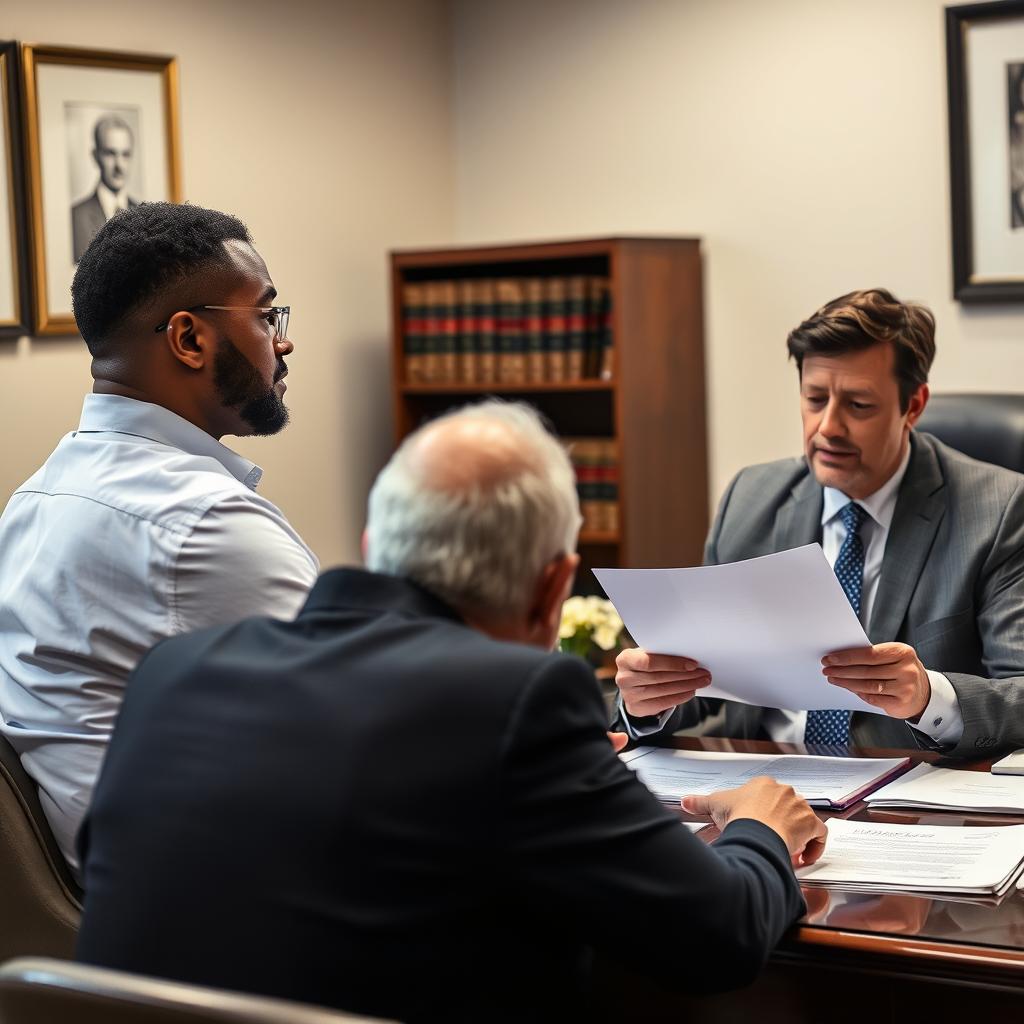
What happens at a criminal arraignment in Woodley Park
If you have been arrested or charged with a criminal offense in Woodley Park, one of your first court appearances will be an arraignment. At the arraignment, the court formally advises you of the charges, ensures you understand your rights, and sets the conditions under which your case will proceed. For many people, the arraignment is the first direct encounter with the criminal justice process, and knowing what to expect can help you approach the hearing with greater clarity. Law Offices Of SRIS, P.C. can assist you at every stage, from the initial appearance through trial or resolution. To discuss your situation directly, reach us at (888) 437-7747. Law Offices Of SRIS, P.C. – Advocacy Without Borders.
What is a criminal arraignment?
An arraignment is the formal court proceeding where a person accused of a crime is brought before a judicial officer, informed of the specific charges, and asked to enter a plea. In Woodley Park, criminal arraignments are handled at the D.C. Superior Court, Criminal Division, located at 500 Indiana Avenue NW. The District of Columbia does not operate under a state court system; instead, the Superior Court exercises jurisdiction over local criminal offenses, while more serious or federal charges may proceed in the U.S. District Court for the District of Columbia. At a typical arraignment, the judge or magistrate will read the charges, explain the defendant’s rights—including the right to counsel and the right to a jury trial—and accept a plea of not guilty, guilty, or, in certain circumstances, no contest. The arraignment is not a trial; it is a procedural milestone that sets the course for the case ahead.
Step-by-step: what occurs at the arraignment
The sequence of an arraignment in D.C. Superior Court generally follows a structured path, though each case can differ based on the nature of the charges and individual circumstances. First, the defendant is called to the courtroom and the charges are stated aloud. The judicial officer then confirms that the defendant has received a copy of the charging document and understands the allegations. Next, the defendant is informed of certain constitutional and statutory rights, including the right to an attorney; if the defendant cannot afford a lawyer, the court may appoint counsel through the Public Defender Service for D.C., depending on eligibility. The court then asks how the defendant wishes to plead. A plea of not guilty is entered if the defendant does not admit the charges, and the case is scheduled for further proceedings. A guilty plea or no-contest plea triggers a different path and may be followed by sentencing immediately or at a later date, though the court will first ensure the plea is knowing and voluntary. Finally, if the defendant is in custody, the court addresses release conditions. Unlike many states, the District of Columbia does not rely on a conventional cash bail system for most offenses. Instead, the Pretrial Services Agency, a federal entity, conducts a risk assessment and recommends release conditions—such as personal recognizance, supervised release, or limited detention—based on factors like community ties, flight risk, and the nature of the alleged offense.
What happens after the arraignment
Once the arraignment is complete, the judicial officer will typically set a status hearing date, a preliminary hearing date if applicable, or a trial date. For misdemeanor offenses, trial may be scheduled within a timeframe that considers Speedy Trial Act requirements and court availability. For felony charges, the case may proceed to a preliminary hearing in Superior Court or be presented to a grand jury. Throughout this period, the defendant must comply with any release conditions imposed, such as maintaining contact with the Pretrial Services Agency, surrendering a passport, or avoiding contact with alleged victims. The arraignment thus serves as the launch point for all subsequent criminal proceedings in the District of Columbia.
How Mr. Sris and his Of Counsel approach criminal arraignments
Mr. Sris and his Of Counsel team have extensive experience appearing in D.C. Superior Court and understand the local practices and procedures that shape each arraignment. Their involvement begins before the hearing itself: they review the charging documents, identify potential defenses, and prepare the defendant for what to expect in court. At the arraignment, they represent the client directly, ensuring that the client’s rights are protected, that any relevant motions are raised at the earliest opportunity, and that arguments for fair release conditions are presented clearly. After the arraignment, Mr. Sris and his Of Counsel continue to develop the defense strategy, whether the path leads to negotiations with the U.S. Attorney’s Office, substantive motions, or trial. Because the firm was founded in 1997 and has documented over 4,739 case results across multiple practice areas, clients benefit from substantial courtroom experience. Results may vary. in any particular case.
About Mr. Sris and his Of Counsel team
Mr. Sris, Owner and Founder of Law Offices Of SRIS, P.C., is a former prosecutor who has practiced law since 1997. He is admitted in Virginia, Maryland, the District of Columbia, New Jersey, and New York. His background includes testimony before the Virginia House Courts of Justice Committee in support of 2019 HB 635 (chief patron Del. David Bulova). The firm’s Of Counsel attorneys are experienced practitioners who collaborate with Mr. Sris on criminal defense matters. Together, they bring over 120 years of combined legal experience. Results may vary. ()
Frequently Asked Questions
Do I need a lawyer at my arraignment in Woodley Park?
While you are not legally required to have a lawyer at an arraignment, having an experienced defense attorney can significantly affect the course of your case. The arraignment sets the stage for everything that follows. An attorney can challenge the sufficiency of the charges, argue for more favorable release conditions, and ensure that your rights are preserved from the outset. At Law Offices Of SRIS, P.C., Mr. Sris and his Of Counsel provide representation at arraignments and throughout the criminal process. To discuss your situation, call (888) 437-7747.
What plea should I enter at an arraignment?
In the vast majority of cases, a defendant enters a plea of not guilty at the arraignment. This preserves the right to contest the charges, allows time for a thorough review of the evidence, and keeps open the possibility of negotiating with the prosecution. Entering a not-guilty plea does not mean the case will necessarily go to trial; many matters are resolved after arraignment through motion practice, plea discussions, or diversion programs. Mr. Sris and his Of Counsel can advise on the most appropriate plea based on the specific facts of your case.
Can I be released at the arraignment in D.C.?
Yes, many defendants are released at the arraignment or shortly afterward under conditions recommended by the Pretrial Services Agency. The District of Columbia generally does not use cash bail for most charges. Instead, PSA evaluates factors such as community ties, employment status, and criminal history before recommending release on personal recognizance or under supervised conditions. An attorney can present additional information to the court that may improve the likelihood of release with minimal restrictions.
What if I am not a U.S. Citizen? Will an arraignment affect my immigration status?
A criminal arraignment can have consequences beyond the criminal case, including potential immigration effects. The nature of the charges and the final disposition can influence whether a conviction may trigger inadmissibility or removal proceedings. Mr. Sris and his Of Counsel are sensitive to the interplay between criminal defense and immigration law and work to address these considerations as early as possible.
How long does an arraignment take in D.C. Superior Court?
The time between arrest and arraignment is typically short, often occurring within the next business day for defendants in custody. The hearing itself is often brief—usually a matter of minutes—but the overall court appearance may require waiting as multiple cases are called. For defendants not in custody, the arraignment may be scheduled weeks after the initial charging document is filed, depending on the court’s calendar. For guidance on your specific timeline, contact Law Offices Of SRIS, P.C. at (888) 437-7747.
What happens if I miss my arraignment?
Missing an arraignment can lead to serious consequences, including the issuance of a bench warrant for your arrest. If you cannot appear on the scheduled date, you or your attorney should notify the court as soon as possible and seek to reschedule. A bench warrant can complicate your release conditions and may add new charges. If you have missed an arraignment, prompt action with the help of an experienced criminal defense attorney is essential.
Will I be handcuffed or in jail clothing at the arraignment?
If you are in custody, you will likely appear in some form of restraint, but the court strives to minimize prejudice by allowing defendants to dress in street clothing for hearings. The U.S. Marshals Service or the D.C. Department of Corrections manage custody and transport. Your attorney can address any concerns about your appearance with the court. For defendants who are not in custody, no restraints are used.
Can the charges be dismissed at the arraignment?
While it is uncommon for charges to be dismissed outright at the arraignment, certain legal arguments can be raised at this stage that may narrow or resolve the case early. For example, if the charging document is defective on its face, an attorney may move to dismiss. More typically, dismissal occurs later in the proceedings after motions, investigation, or negotiations. Mr. Sris and his Of Counsel evaluate each case immediately to identify any grounds for early resolution.
Criminal defense representation in Washington, D.C. · Criminal lawyer serving Georgetown · Criminal defense in Cleveland Park · Criminal attorney in Chevy Chase
To explore outbound authority sources, visit the D.C. Superior Court page, the D.C. Court of Appeals, or the D.C. Courts main site for official court information.
Attorney advertising. Prior results do not guarantee a similar outcome.
4,739+ documented case results across all practice areas. Results may vary.
Case results depend on a variety of factors unique to each case.